
Livestock
Farming and sustainable land management is the heart of Slough Farm. As part of that, we take pride in providing the best quality of life possible for our wide range of livestock.
Our livestock is raised in partnership with nature to restore soil health, improve biodiversity, and strengthen ecosystems. Rotationally grazing, livestock helps build organic matter in soil, increasing water retention, and supporting healthy pastures. These practices prioritize animal welfare, minimize chemical inputs, and contribute to resilient landscapes—producing high-quality meat while regenerating the land for future generations.
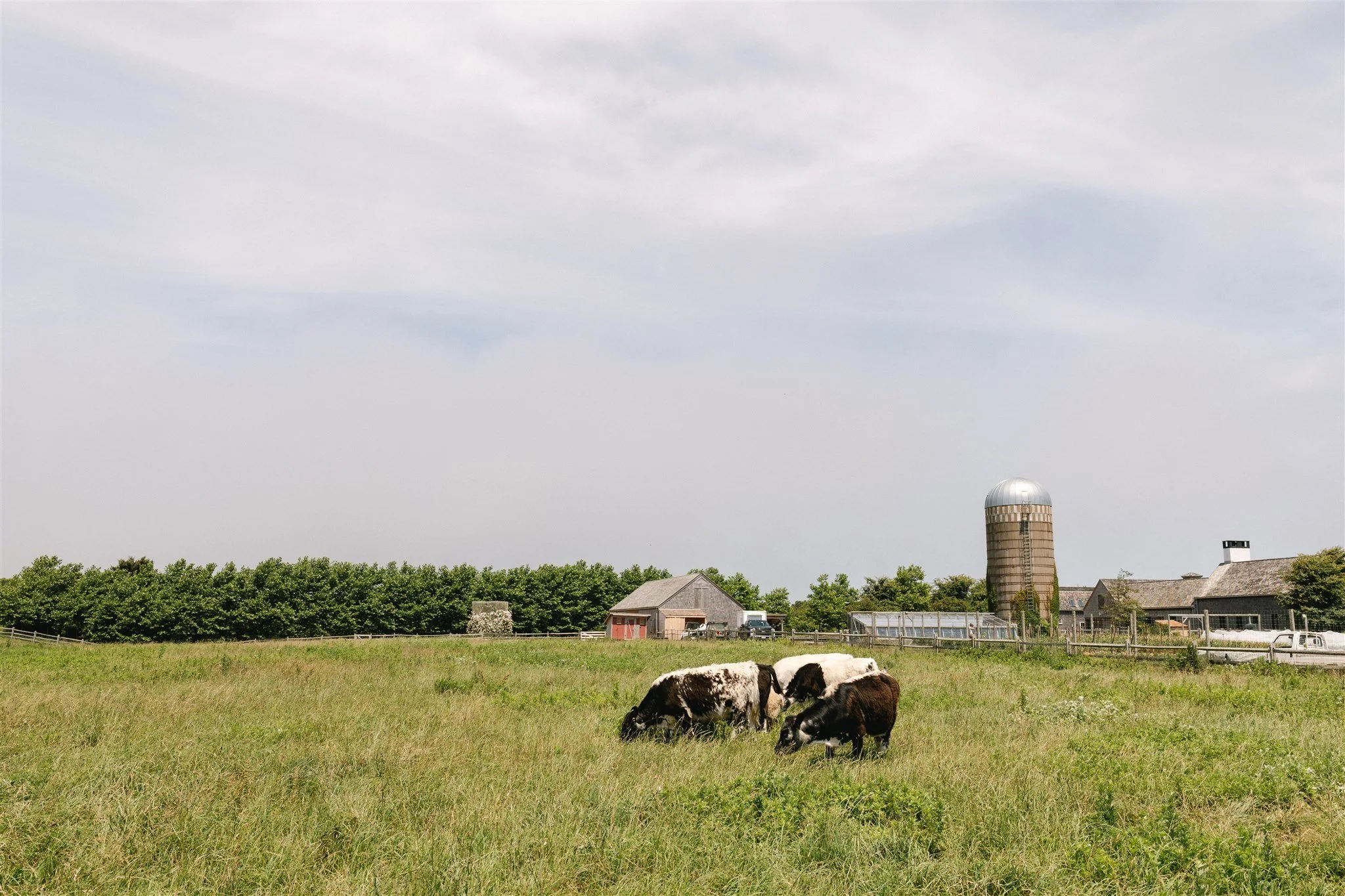
We’ve chosen breeds that do well in our climate and our style of farm management. Our ruminant animals, cows, and sheep, are fed no grains and are rotated through our 75 acres of owned and leased pastures. We are grateful for our opportunity to manage lands owned by the Town of Edgartown and The Nature Conservancy. Our chickens and turkeys follow behind the ruminant animals in small pens or tractors to give them access to grasses, seeds, bugs and sunshine.
Cows
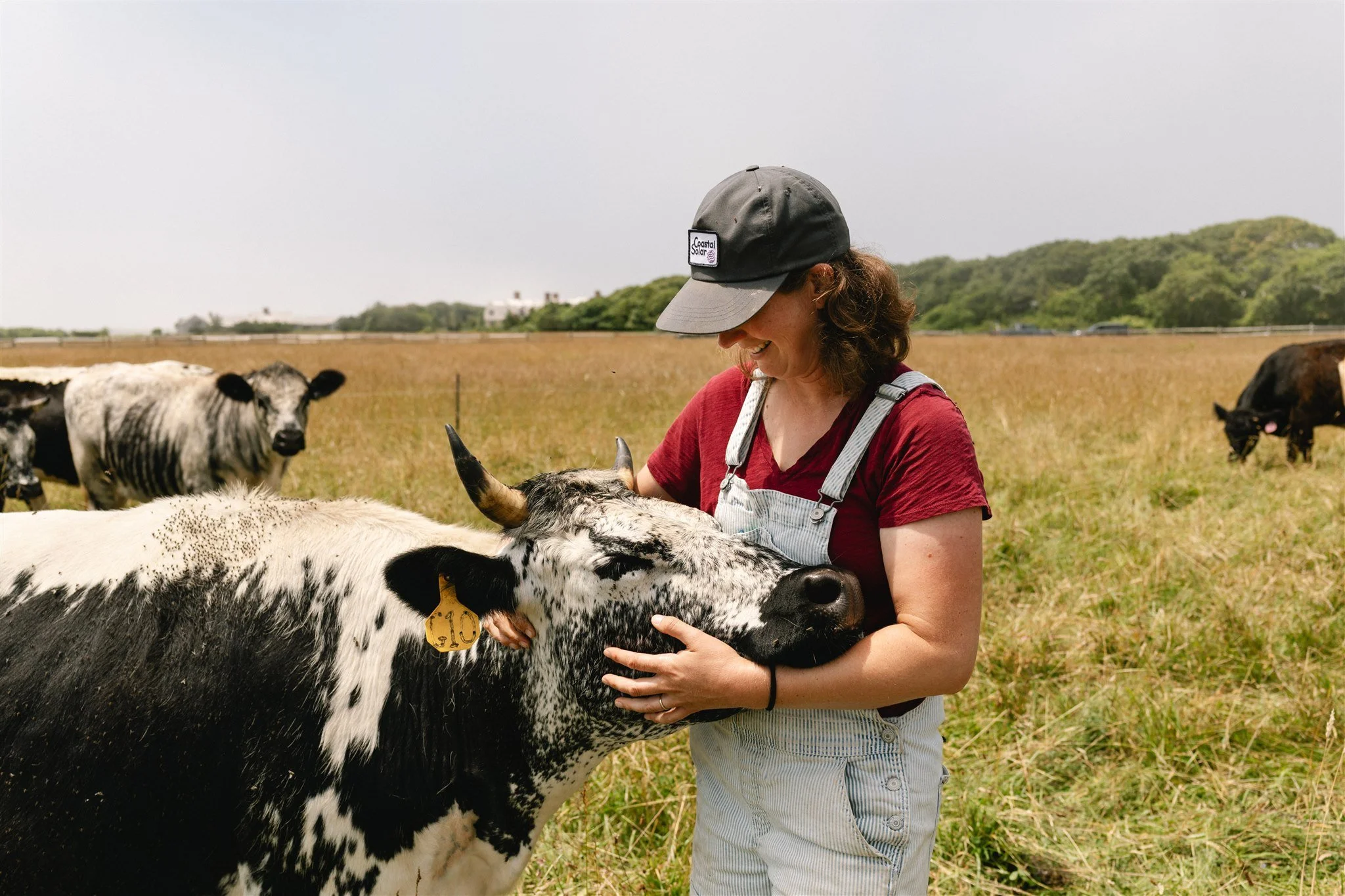
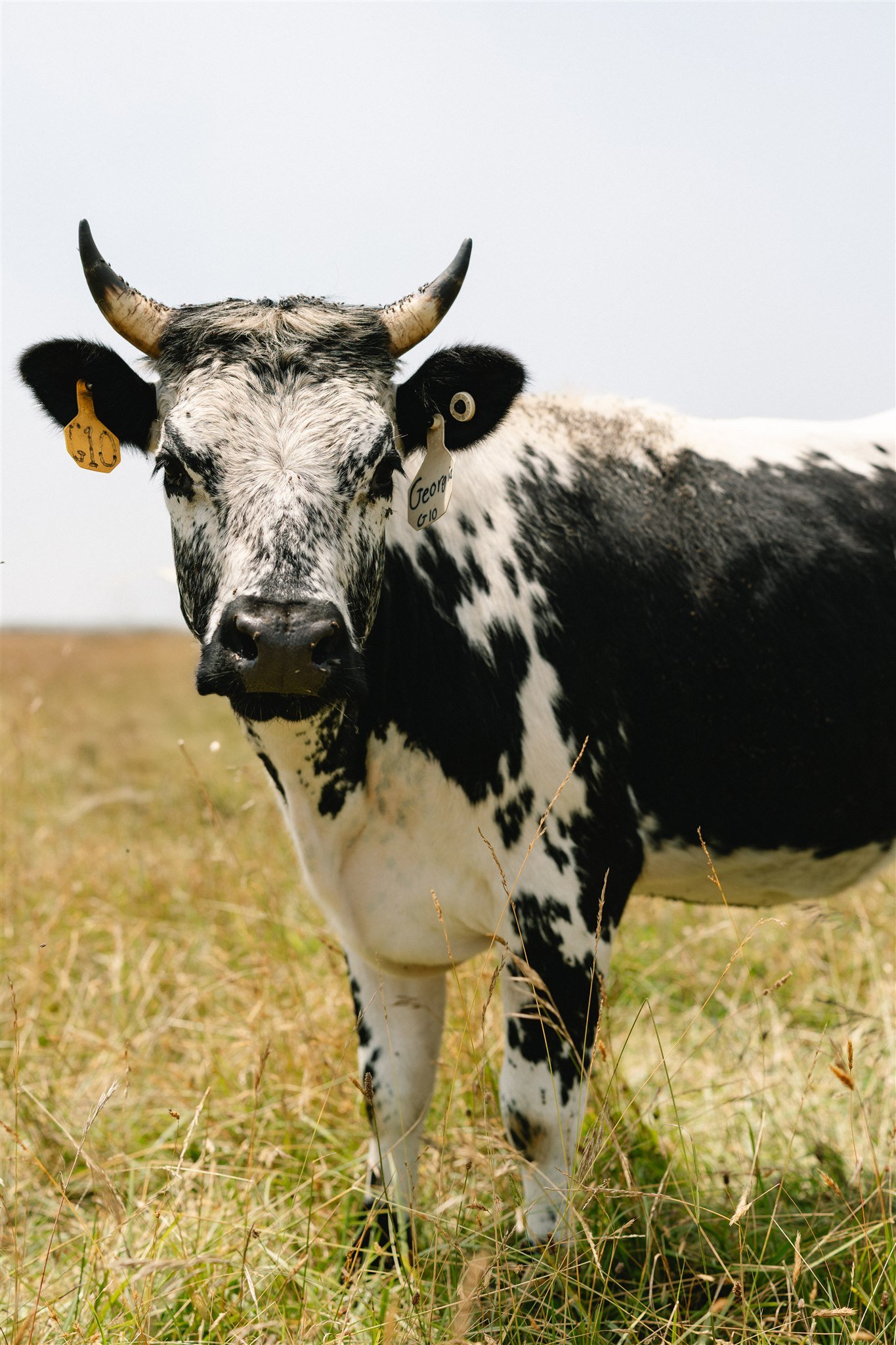
We raise cross-bred Belted Galloway and purebred Randall Linebacks from our 10 brood cows and Bo, our Randall Lineback bull.
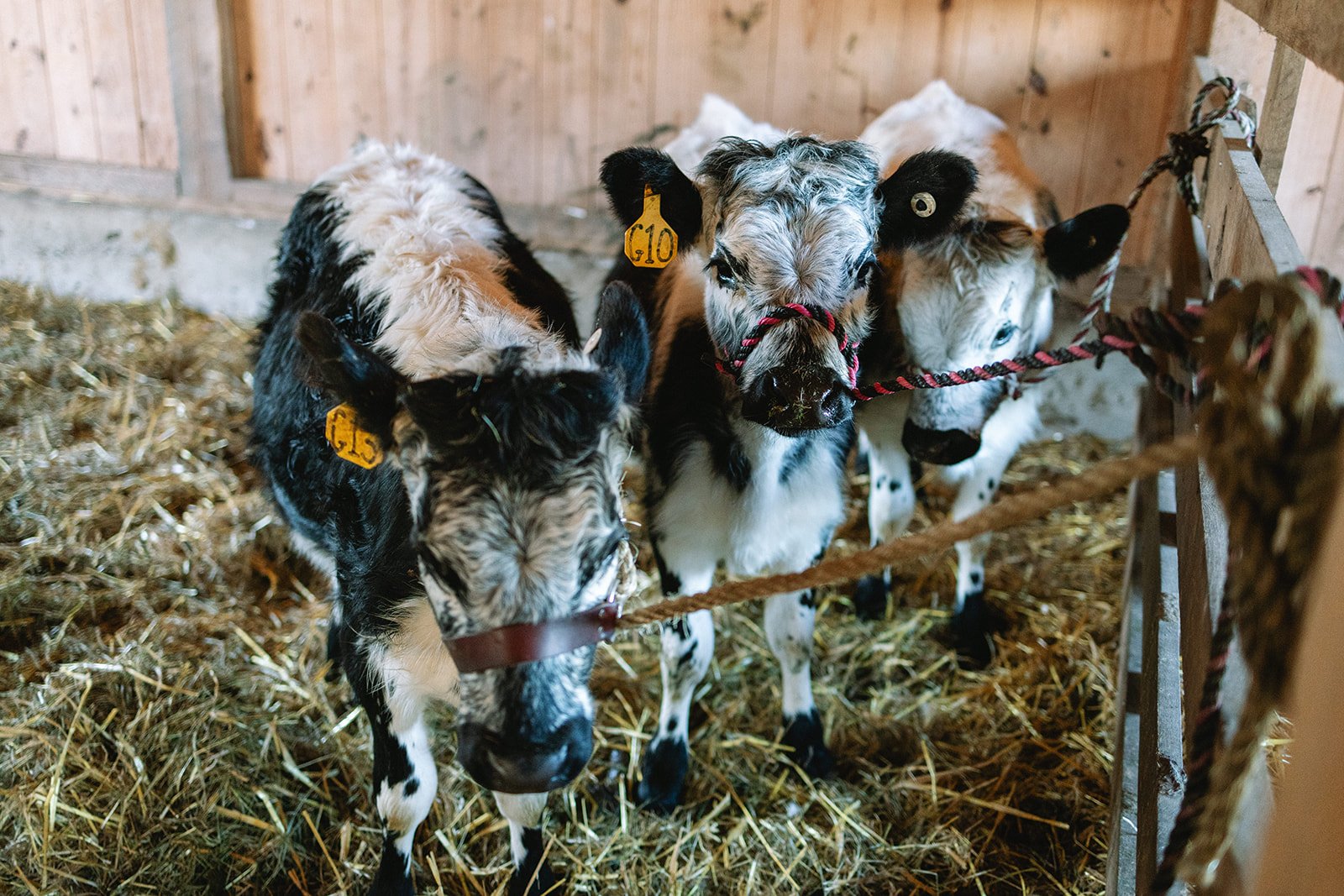
Each fall, our brood cows have beautiful calves that we raise for about 2 years. Many of our fellow island cattle farmers decide to calve at different times of year from us. Thus we are often able to provide our bulls to other farms around the island to provide breeding services. Our current bull, Bo, is a three year old purebred Randall Lineback.
The Randall Lineback is the last remaining "all-purpose" local landrace breed of cattle that once thrived in New England. Originating in the 1600s, these cattle were a mix of European and North American breeds, developed for milk, meat, and agricultural labor. Isolated from outside breeding, these cattle adapted to local conditions over generations. However, with the rise of specialized purebred cattle in the late 1800s and 1900s, most landrace breeds, including those in New England, were either replaced or crossbred. A small herd of 20 was found in the 90s and since then, amazing efforts have been instilled to preserve this breed. The Randall Lineback remains a testament to the resilient, multi-purpose cattle of early American farming. We are excited to be doing our part to help this heritage breed continue to grow in population!
Lambs
New lambs are welcomed each year beginning in March.
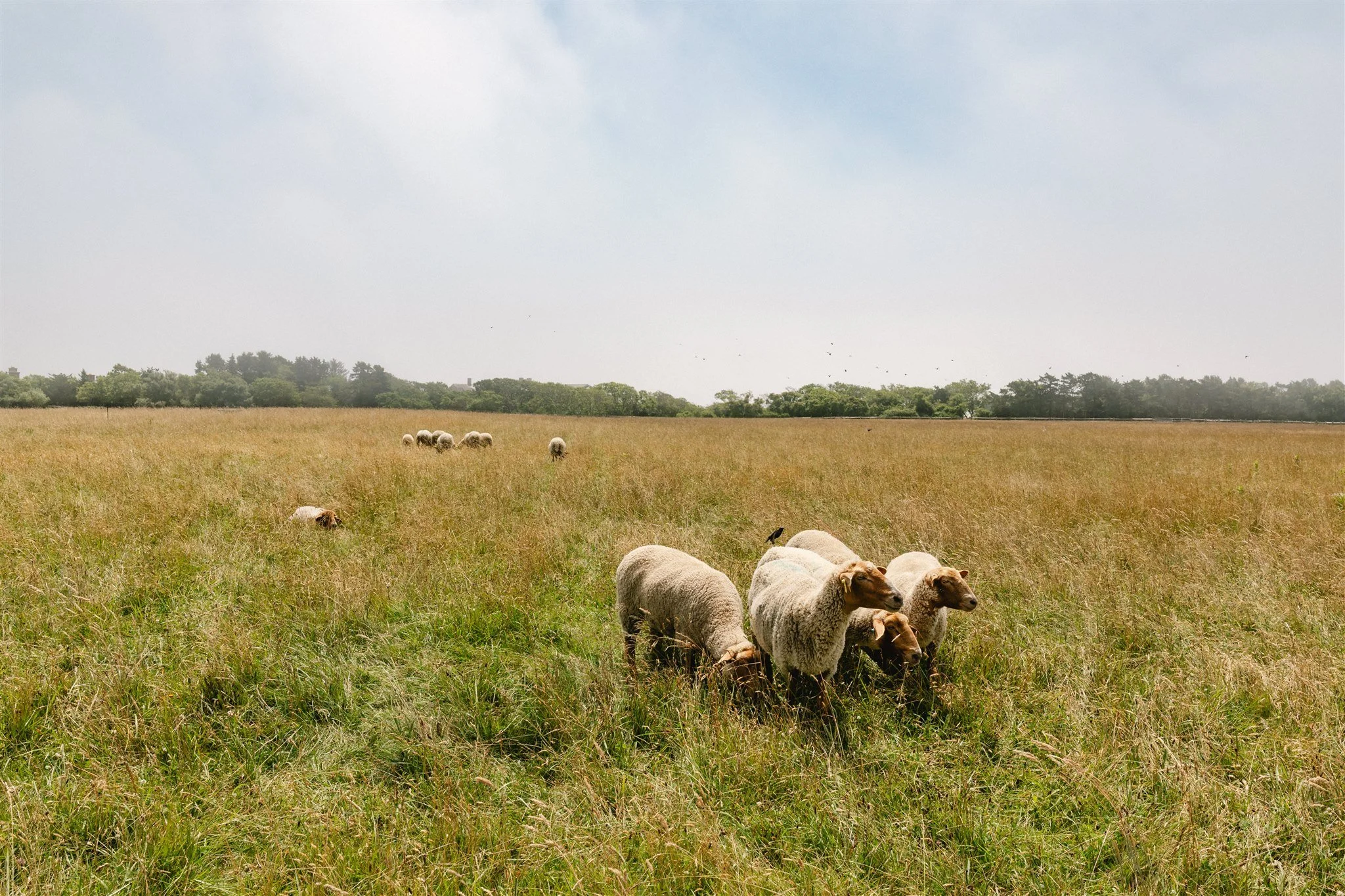
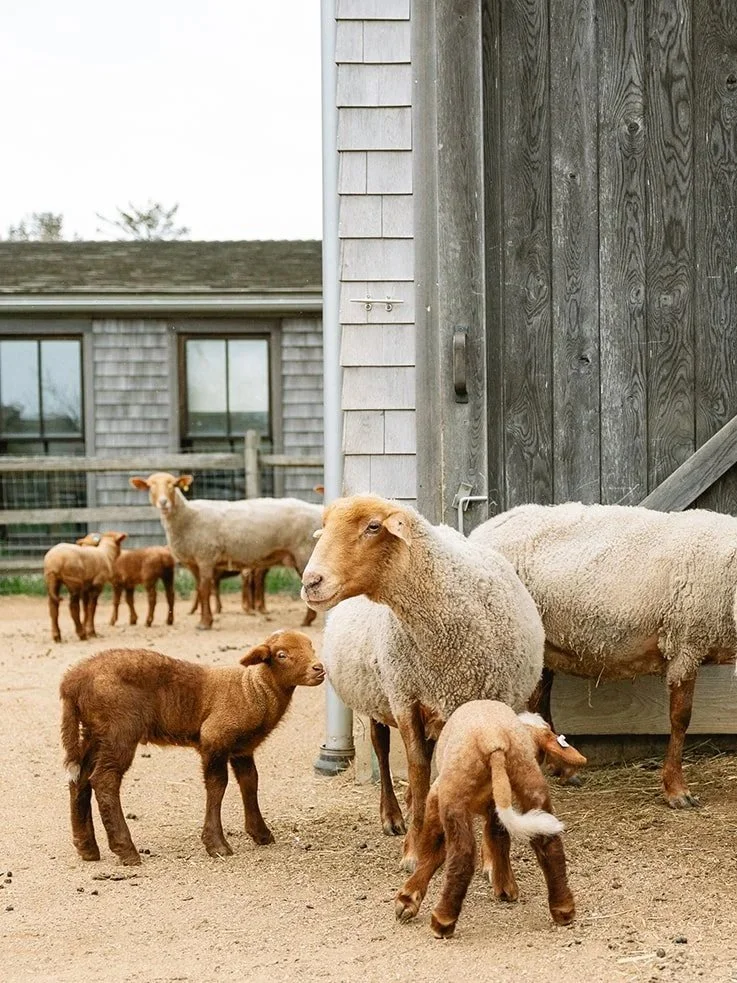
Our grassfed flock of tunis sheep are our true stars. Eating only pasture and hay they grow the most beautiful fleeces and lambs. The wool from these heritage sheep is used for a vartiety of sheep to sweater programs from felt snakes with preschoolers to weaving, spinning and knitting with k-12 field trips and adult programs.
Each year we welcome between 25-50 lambs beginning the first week of March. Our lambs are raised through the grazing season and sent off for processing each fall when they are about 6 months of age. During these six months, we evaluate our female lambs (ewe lambs) to decide which animals we might keep as breeding stock. We strive to use every part of our animals- their sheepskins are saved and used as educational tools in our natural sheepskin tanning class that takes place every winter while their meat and bones are donated to events and programs all across the island.
Layers and Broilers
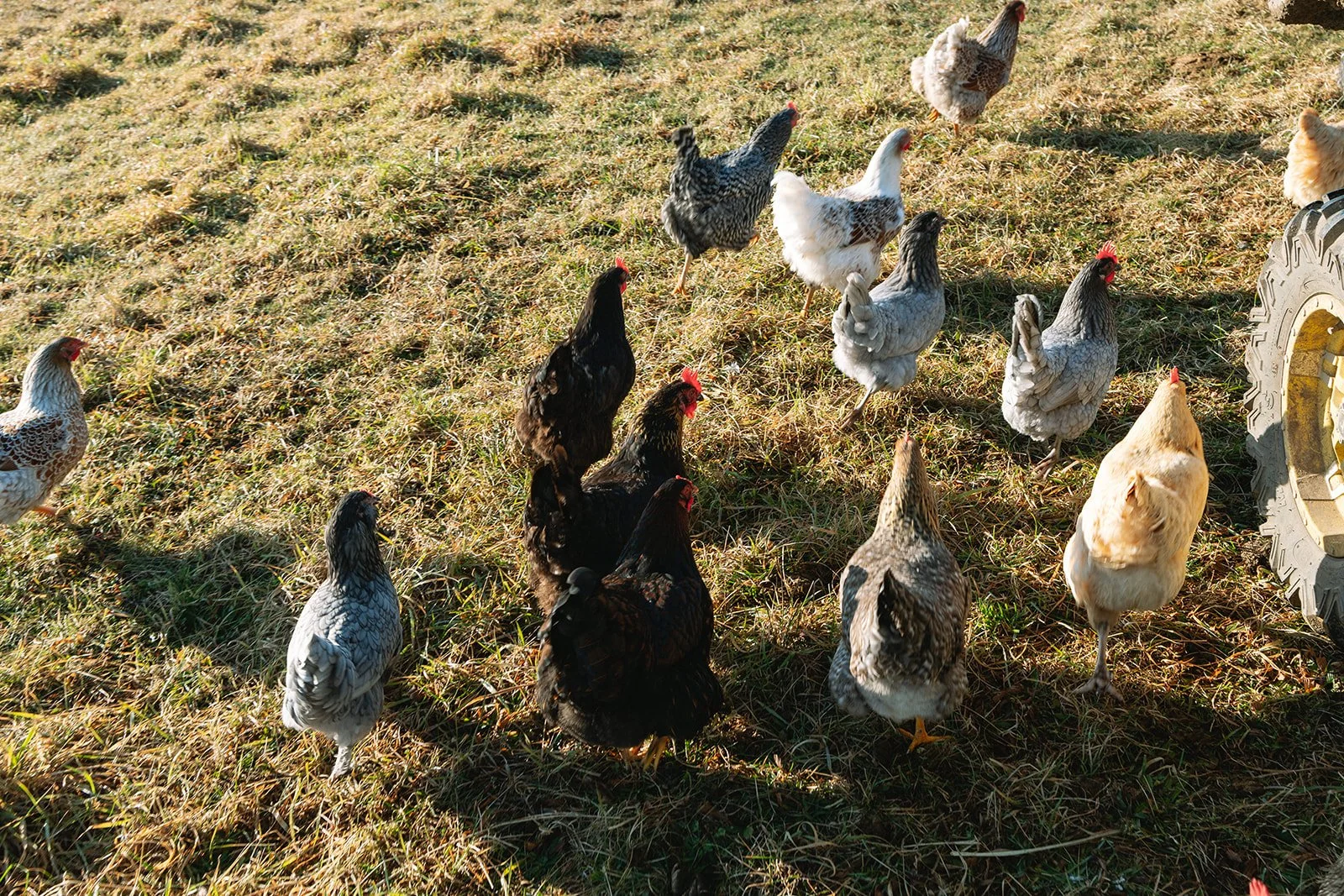
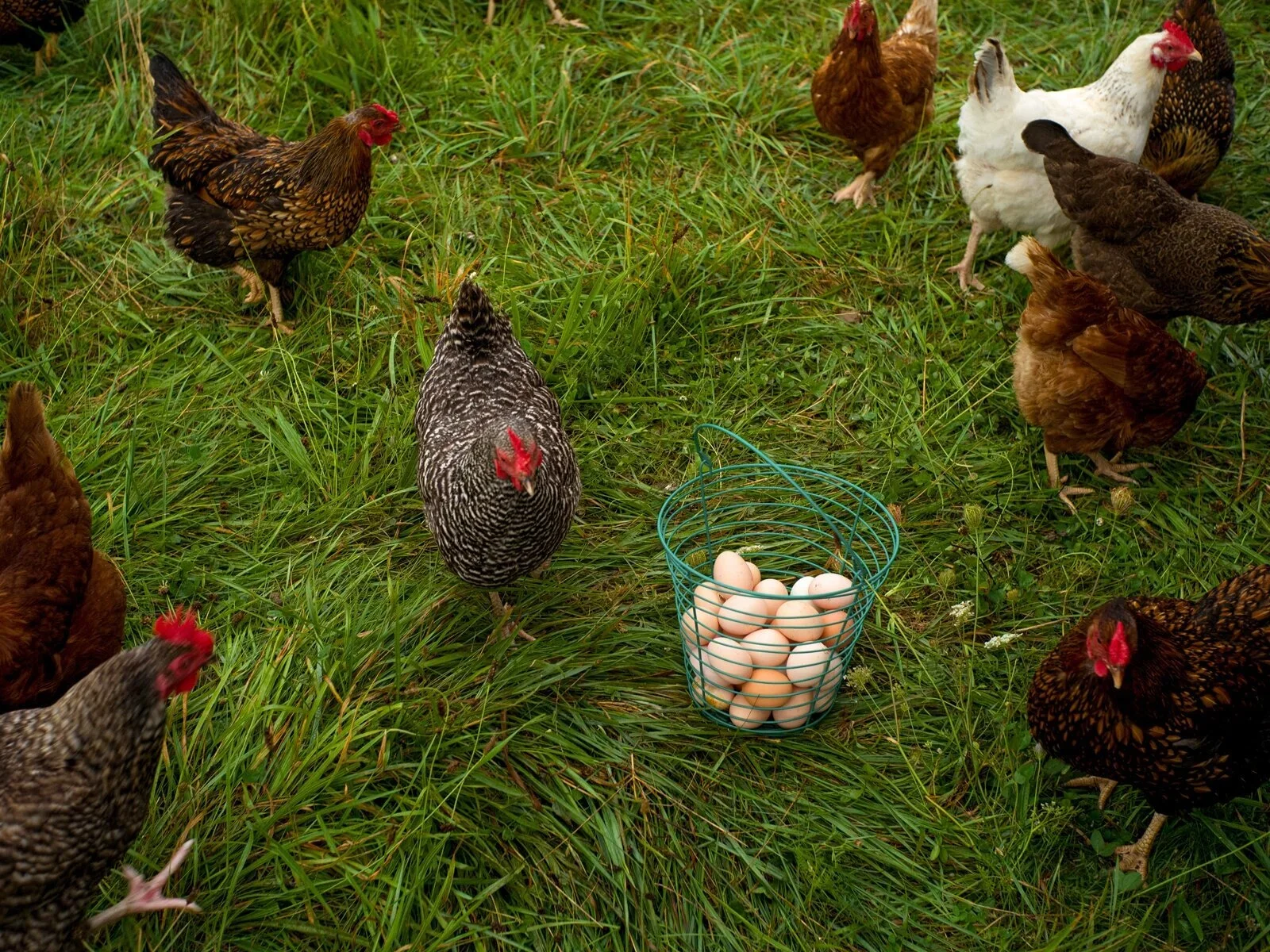
Our hens and broilers are raised on open pasture, where birds can roam freely, forage for grasses and insects, and express natural behaviors. This humane approach supports animal health and results in flavorful, nutrient-dense meat. Managed pasture systems also benefit the land by improving soil health and distributing natural fertility, making pasture-raised chicken a responsible and sustainable choice.
Our poultry, sheep, and cattle provide meat and eggs, much of which is donated across the Vineyard in collaboration with Island schools, The Family Center, Island Grown Initiative, the Island Food Pantry, and other fellow members of the Food Equity Network.
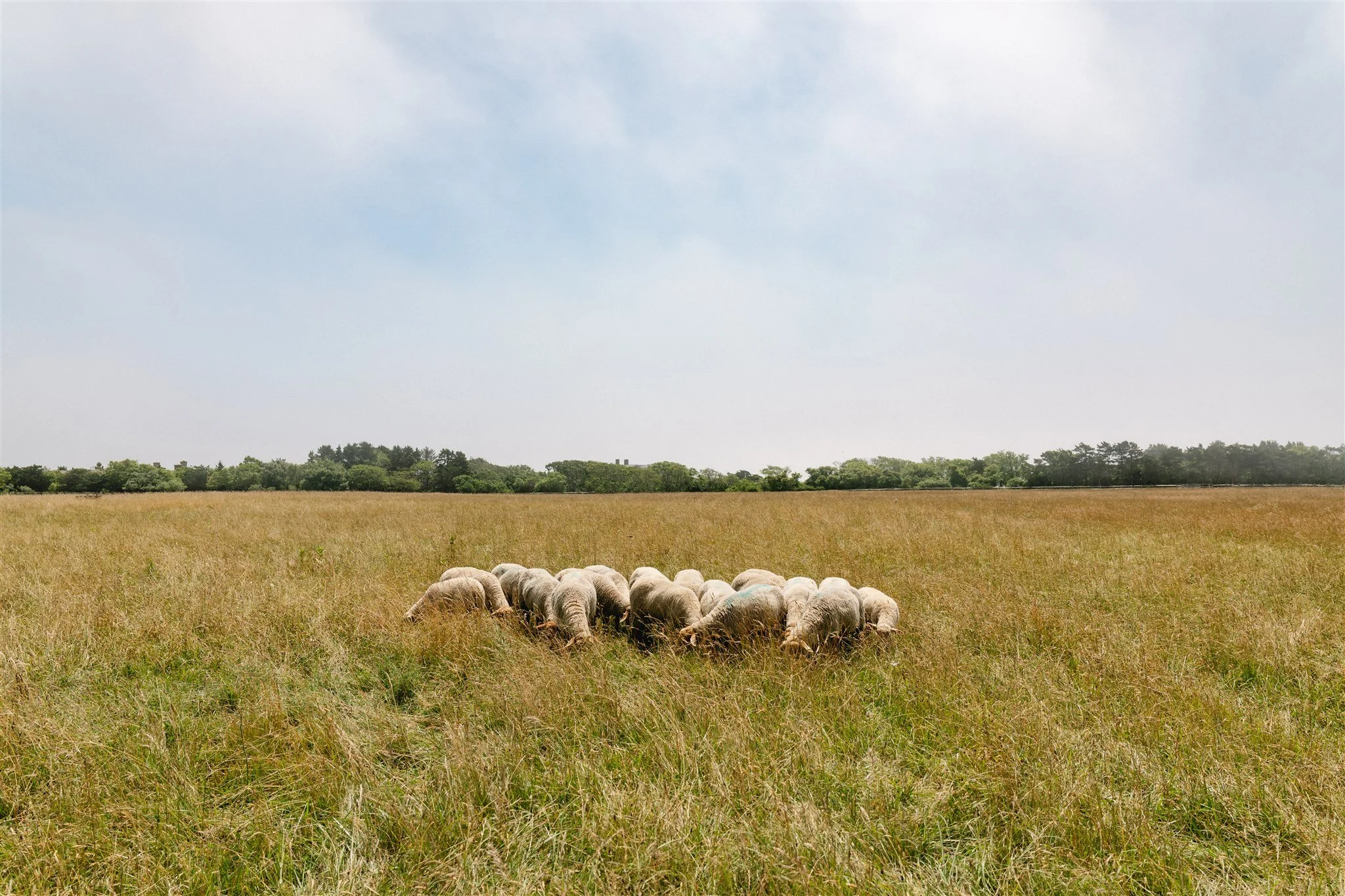
ROTATIONAL GRAZING
Our animals graze together throughout the summer wherever possible; an integrated livestock technique that maximizes ruminants’ positive impact on the soil they aerate with their hooves and on the forage plants they eat.
The herd is moved daily to ensure their grazing stimulates growth. The poultry follow along behind, getting fat and happy off the maggots left behind in cow pats and thus reducing the fly population. All in all, it's a pretty clean operation.
Farmer Support
From the very beginning, it has been part of Slough Farm’s mission to support and strengthen but not compete with, our island farmers.
We are always excited to work with our fellow farmers through equipment shares, collaborative off island trips, use of our breeding males, lending a hand when your cows are out, freezer space or creating collaborative programming with the Martha’s Vineyard Agricultural Society and through our farmers grant program, funded by Slough Farm Foundation.
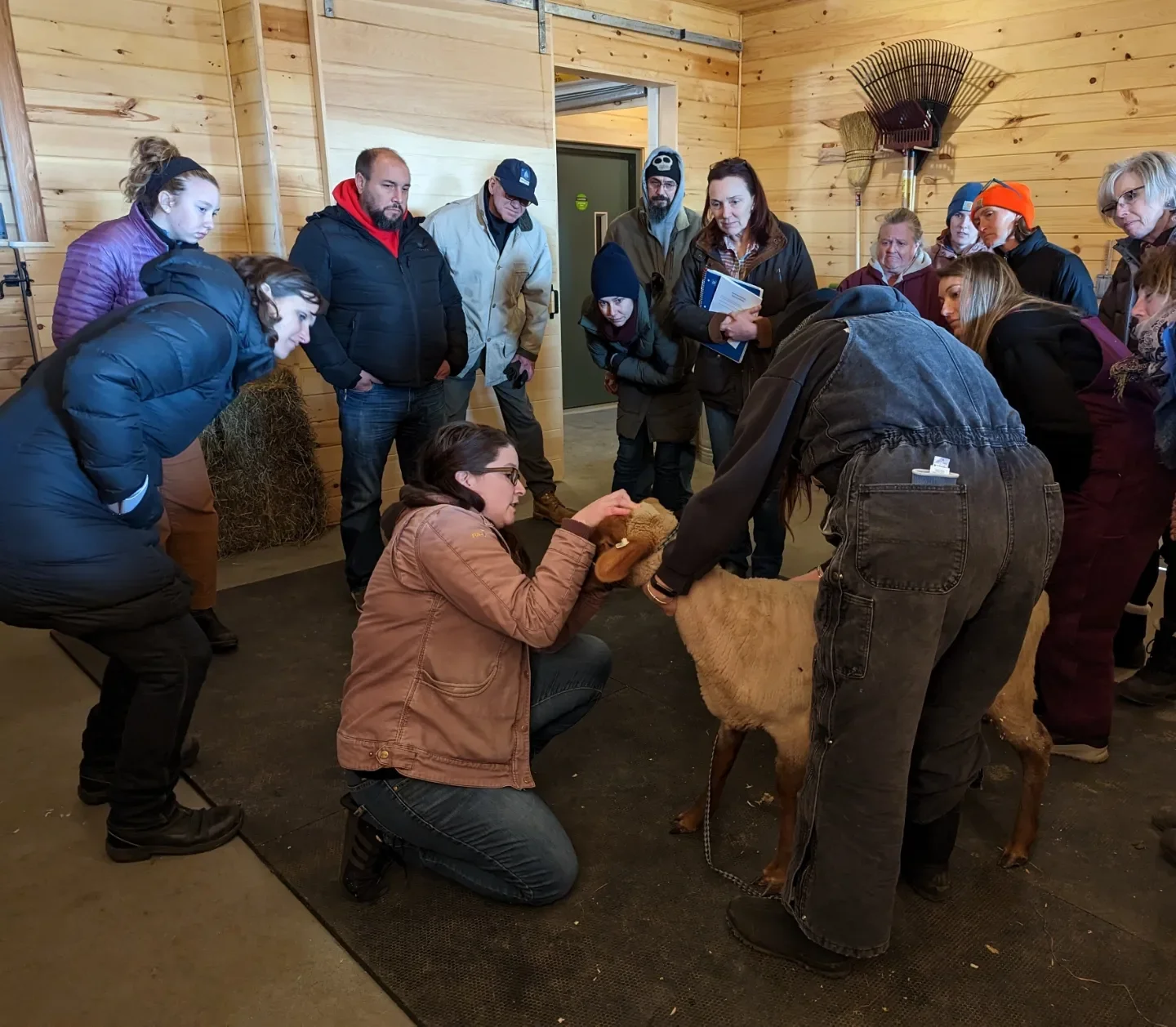
Slough Farm has established a relationship with Dr. Erin Masur from Sheep Rock Vet in order to provide 24/7 Veterinary telemedicine service for farm animals. Dr. Masur comes a few times a year to complete herd and flock health exams and diagnose long term issues for farmers. Once she has been to your farm, she can text, email, call or video chat with you to assist with emergencies. Slough Farm is Dr. Masur’s host and keeper of supplies in the event something is needed right away. We are so grateful to Dr. Masur for taking on MV as part of her client load!
Learn more about Farmer Support
Community Donations
Slough Farm takes pride in our ability to share our bounty with those in need on our island. Anything we do not use on site for programming, makes its way across the island to a variety of food equity partners and non profit organizations. While we are not a large scale producer, we have worked hard to regeneratively grow and raise as much as we can on the 80 acres we farm. We prioritize our food going to places that can make the biggest impact. Our donations shift with the seasons and we are so grateful to our partners who accept and utilize what we have, when we have it.
Donation outlets include but not limited to, Island schools and preschools, YMCA of MV, Council on Aging, Hospice of MV, MV Boys and Girls Club, The Anchors, Island Food Pantry, MV Center for Living, Serving Hands, MV Libraries, Kinship Heals, Island Grown Initiative, Chilmark community lunch, The Farm Institute and Produce RX.